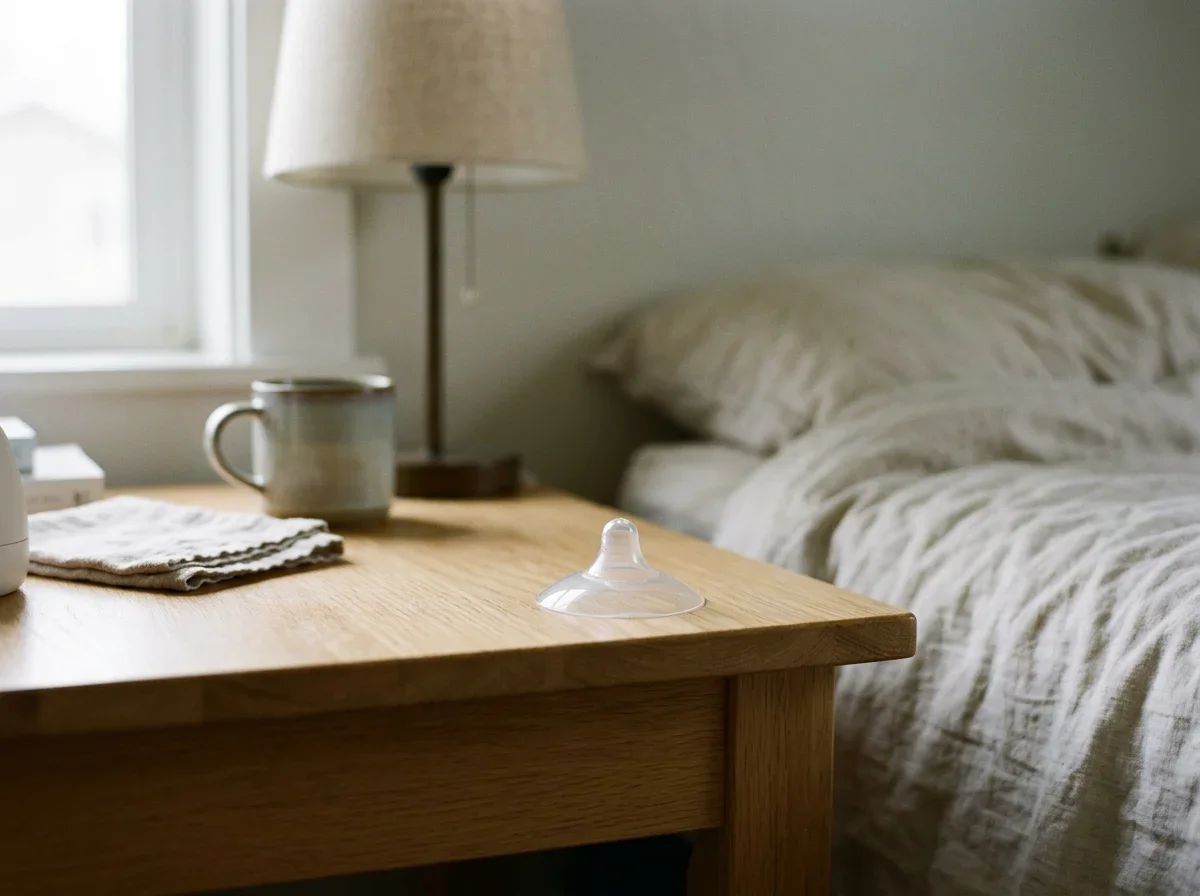
A nipple shield is a thin silicone cover worn over the nipple during breastfeeding. They're often handed out in the hospital as a quick fix for a tricky latch, and a lot of parents leave with one before they've really been shown how or why to use it.
I'm not against nipple shields. They can be a really useful tool in the right situation. But in my practice, I use them a lot less often than most people expect, and only for a couple of specific reasons.
When I don't recommend them
For nipple pain. Pain is a sign that something about the latch or feeding needs attention. A shield can mask that pain, but it doesn't fix the cause. It's much better to figure out why feeding hurts, whether that's positioning, a shallow latch, oral restriction or something else, and address that directly.
For “flat” nipples. Flat nipples are common, and most babies can latch onto them just fine with some support. Babies breastfeed, not nipple-feed. A deep latch takes in a mouthful of breast tissue, and the nipple is drawn out during the feed. A little shaping, hand expression or reverse pressure softening before latching usually does more than a shield.
In the first few days. This is a big one. Colostrum is thick and comes in small amounts, and it often can't make it through the shield to your baby. A baby can look like they're feeding well while actually getting very little. Those early days are also when your supply is being set up, so effective milk removal really matters.
When they can help
Bottle preference. Some babies who've had a lot of bottles start refusing the breast. The firm shape of the shield feels more familiar, and it can act as a bridge to get them latching and feeding at the breast again. Bottle fed babies tend to latch right away to a shield. We have to assume at first that they aren’t taking in full feeds with the shield but it is a helpful transition tool.
Truly inverted nipples. I'm talking about nipples that retract inward and don't come out with stimulation, not flat nipples. In these cases, a shield can give baby something to latch onto while you work on drawing the nipple out over time.
Even in these situations, I think of a shield as a short-term tool with a plan to wean off it, not a long-term solution.
Using one well
If you are using a shield, a few things make a big difference:
Get the right size. Shields come in different sizes, and one that's too small or too big can cause pain and reduce milk transfer.
Put it on properly. Turn the shield partly inside out before placing it, so it draws your nipple into the tip.
Still aim for a deep latch. Your baby should take in the whole base of the shield, not just suck on the tip.
Keep an eye on intake. Watch wet and dirty diapers and weight gain, since some babies transfer less milk through a shield. If you're unsure, pumping after some feeds can help protect your supply.
How to wean off a nipple shield
Weaning is usually gradual, and it goes best when your baby is calm, not starving.
Start with the shield, then slip it off. Once your baby has had a few minutes and the milk is flowing, gently take the shield off and offer the breast directly. A baby who's already getting milk is more patient.
Try when your baby is drowsy or relaxed. Sleepy feeds, night feeds or right after a nap are often the easiest times to latch without it.
Draw your nipple out first. A little hand expression or a minute of pumping before latching can help the nipple come out and give your baby a head start on flow.
Try side-lying. Feeding while lying on your side lets gravity help draw the nipple out, and many babies find it easier to latch deeply in this position.
Reduce swelling. Swelling can make nipples flatter and harder to latch onto. It's often caused by IV fluids during labour or general breast swelling from engorgement. Reverse pressure softening helps: press your fingertips gently around the base of the nipple for about a minute to push the swelling back, so the nipple stands out and your baby can latch more easily.
Use skin-to-skin. Laid-back positions and skin-to-skin bring out your baby's natural feeding instincts.
Don't force it. If your baby gets upset, put the shield back on and try again at another feed. You want the breast to stay a happy place.
Some babies drop the shield in a few days, others take a few weeks. Both are normal. Eventually I find they prefer to latch without it.
When to get support
If you were given a shield and aren't sure you need it, or you're struggling to wean off one, it's worth having someone take a look. Often the real issue is something we can fix at the latch, and the shield turns out to be unnecessary.
At Village Lactation, I can help you figure out whether a shield is right for you, make sure it's working well if it is, and build a plan to move away from it.