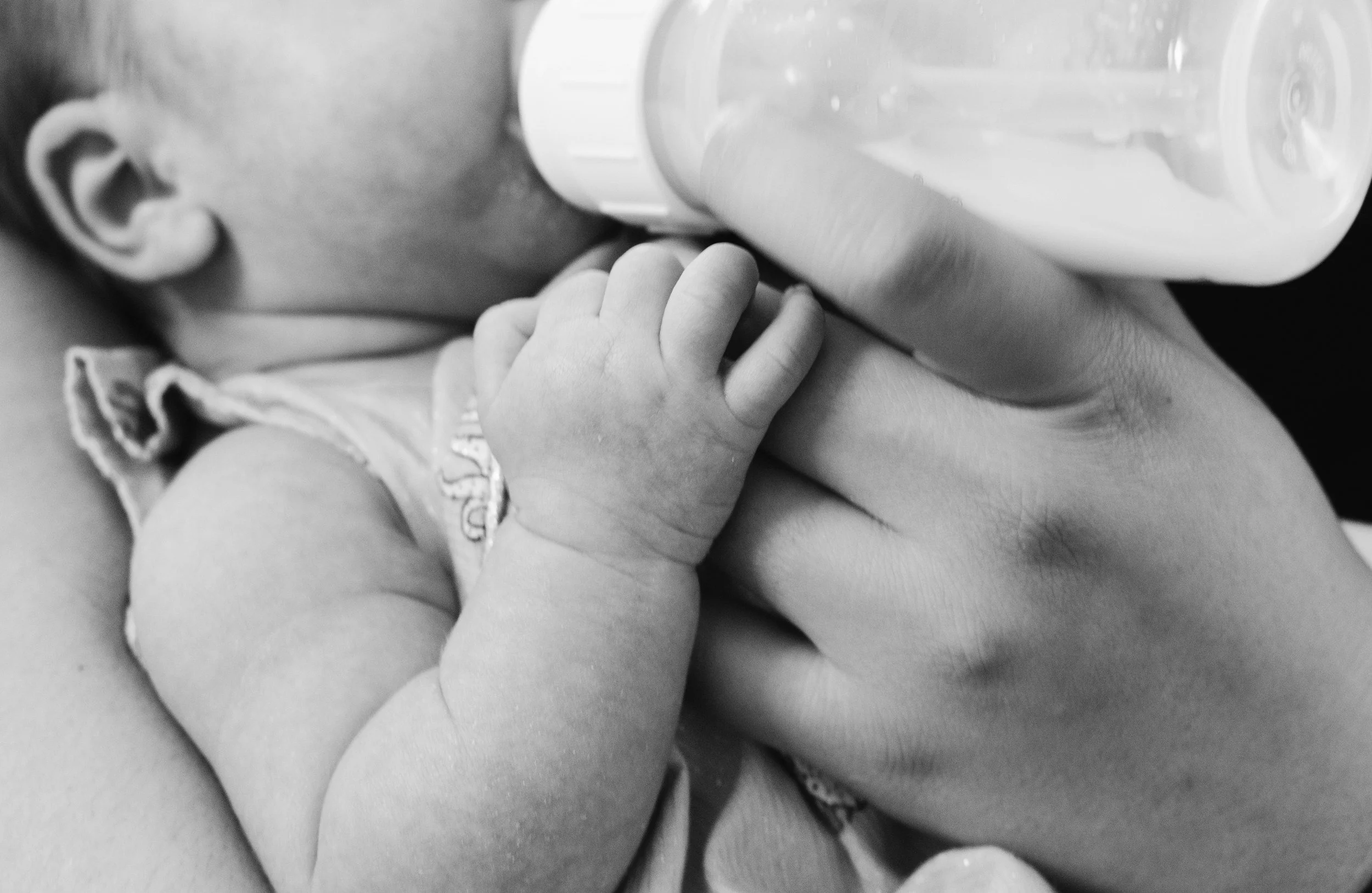
Introducing a bottle to a breastfed baby is one of the questions I get asked most. Parents worry about doing it too early and affecting breastfeeding, or too late and ending up with a baby who refuses a bottle completely.
A bottle can give you flexibility: a partner who can do a feed, a few hours to yourself, or a plan for returning to work. With the right timing and a little consistency, most babies learn to go back and forth between breast and bottle without trouble. Note: this does not cover when to supplement with slow weight gain or feeding complications.
When to start: 3 to 4 weeks
I recommend introducing a bottle at around 3 to 4 weeks, ideally.
By then, breastfeeding is usually more established. Your latch is more settled, your supply is building, and your baby has had time to learn breastfeeding first.
It's also early enough that most babies take to a bottle easily. The longer you wait, the more set in their ways they tend to become.
If your baby needs supplementing earlier for medical reasons, like weight gain or jaundice, that comes first. Your lactation consultant can help you choose a feeding method that protects breastfeeding in the meantime.
How often: once a day
Once a day is enough. You don't need to replace whole feeds to keep your baby familiar with a bottle.
Bedtime is a great time for it, as a small top-up after a breastfeed. Your baby is getting a full feed at the breast, and the bottle just becomes part of the routine. It's also a nice job for a partner to take on.
Choosing a bottle
Look for a bottle with a tapered nipple, one that gradually widens from the tip to the base rather than a short nipple on a wide, flat base. A tapered shape encourages your baby to open wide and take the nipple deeper into their mouth, which is closer to how they latch at the breast. Look up the triangle test when choosing.
You don't need an expensive bottle or a whole collection. Start with one, and only try another if your baby really isn't managing.
Getting the milk
You only need a small amount of milk for one bottle a day. There are two easy ways to collect it:
Pump once in the morning. Supply tends to be highest in the morning, so a short pump after your first feed of the day is often enough to cover that evening's bottle. 20-30 minutes after tends to work the best. Waiting too long may risk reducing supply prior to the next feed.
Collect passively. Milk collection shells worn in your bra, or a silicone collector on the opposite breast while you feed, can catch milk that would otherwise leak away. Over a day, this can add up to enough for a top-up.
Either way, you're not building a freezer stash. You just need enough for one bottle.
Stay consistent, especially from 4 to 8 weeks
This is the part most families wish someone had told them.
It's common to introduce a bottle, see that your baby takes it well, and then stop. Life gets busy, and it feels like a box you've already checked. Between 4 and 8 weeks is when most people drop the daily bottle.
The problem is that around 2 months, babies get stubborn. A baby who happily took a bottle at 4 weeks may flat out refuse one at 10 weeks if they haven't had one in a while. Many parents tell me they wish they had kept it going.
Keeping one bottle a day in your routine is far easier than reintroducing it later, especially if you're planning a return to work or time away.
When to get support
If your baby is refusing the bottle, struggling to latch onto it, or if bottles seem to be affecting breastfeeding, reach out. Small changes to the bottle, the position or who offers it can make a big difference.
At Village Lactation in Victoria, BC, I can help you plan bottle introduction around your goals, whether that's a partner feed at bedtime or getting ready to go back to work.